Our Principles: Measure First, Engineer Safety Independently
Five operating principles for how Catfish Vanguard designs robotic welding systems, works with shipyards and backs up what it says.
In this article
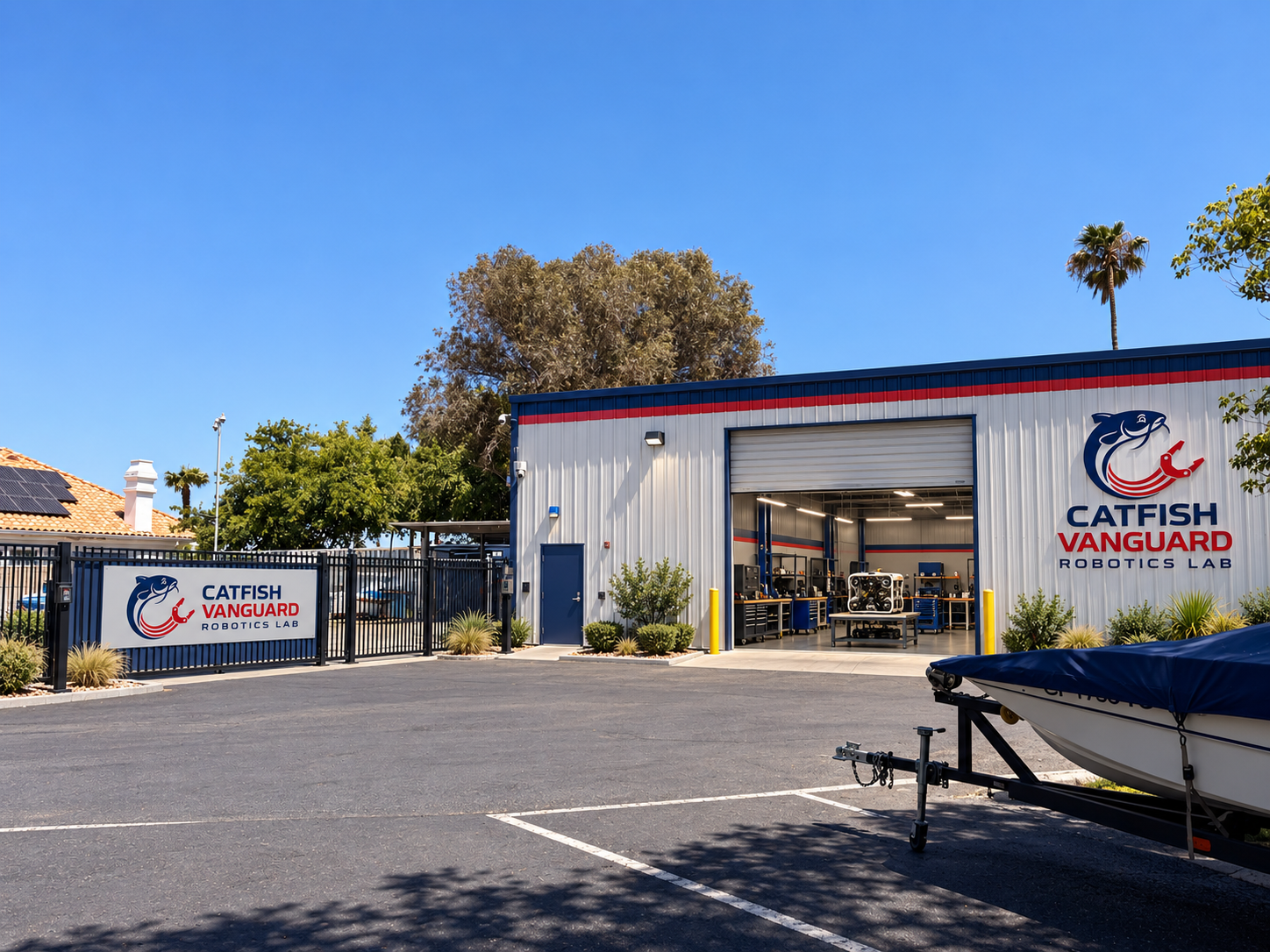
Catfish Vanguard builds and tests its robotic welding systems at its lab in Rio Vista, California. Five principles guide how we design those machines, work with shipyards and talk about what we make.
1. Measure first
Promising that automation will transform a shop is easy. Knowing whether it will is harder. Every engagement starts by measuring the work: which weld families a yard has, how many hours they take, how much they vary and what the labor really costs.
That is why our design-partner program opens with a fixed-scope weld-family study instead of a sales quote. The study delivers a baseline, a cell concept, a payback model and pilot criteria, all built on the customer's own numbers. If the numbers do not support automation, the study says so.
The same rule applies to how we describe ourselves. We do not publish productivity, quality or uptime figures until we have measured them in real deployments.
2. Safety is independent of planning
Software, including AI-based planning, is getting very good at deciding what a machine should do. Planning software can also be wrong, and in a cell with heavy moving axes and people nearby, safety cannot depend on a planner being right.
Our architecture keeps them apart. Planning software proposes motion, deterministic control executes it within configured limits on position, speed and force, and an independent safety controller supervises the installation and can stop or inhibit motion. We put it simply: AI plans, deterministic control moves, an independent safety layer stops. Each cell uses an installation-specific industrial safety architecture informed by the site risk assessment. We do not claim certifications we have not earned.
3. Your procedures stay yours
A shipyard's welding procedures, part models and production data represent years of expertise. They remain the yard's property. We use them only for the agreed scope, keep CAD and procedures under NDA, and design our software so records can be exported.
The principle shapes the product too. Catfish Weld applies a customer's qualified procedures rather than replacing them with ours, and Catfish Connect works with the equipment a yard already owns.
4. Source domestically and from allied suppliers
The machines that build American ships should rest on a resilient supply chain. We source from domestic and allied suppliers wherever practical and keep our bill of materials transparent. For defense-related work, we consider supply-chain and cybersecurity requirements from the start.
5. Own the robot, keep the platform open
The hardest problems in large-structure welding sit where the robot, the motion system and the software meet. That is why Catfish designs its own seven-axis robot, W7, together with Control X and Catfish OS.
The platform stays open. Catfish OS coordinates supported third-party robots and equipment, so yards can start from what they already own.
What partners can expect
- A study built on your measured data, with every assumption stated.
- Clear descriptions of what each system does today.
- Safety design information you can inspect, within the agreed scope.
- Clear ownership of your procedures and data.
We publish these principles so customers, candidates and investors can judge our work against them.
Sources
- Association for Advancing Automation (A3): robot safety automate.org
- U.S. Maritime Administration maritime.dot.gov
About the author
Catfish Vanguard builds the W7 robot, ARC systems and Catfish OS for high-mix structural welding, from its lab in Rio Vista, California.


